
Charged with a drug crime in Macomb or Oakland County? Or expecting charges?
Drug Crimes Defense Attorney in Macomb & Oakland County
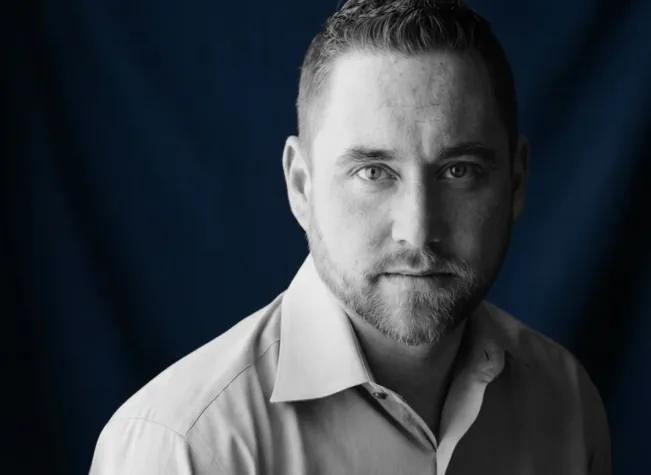
Take a breath. Right now you are probably running every worst case in your head, wondering if this is going to follow you forever. The job. The license. The application with the one question you do not want to answer. It does not have to go that way. A charge is not a conviction.
And whatever brought you here, Scott is not going to judge you for it. Maybe this is the first time you have ever been in trouble. Maybe it is not, and you have been fighting something heavier for a while. Either way, it does not make you a bad person, and it does not change what Scott is here to do. Working people, professionals, parents, folks just trying to make ends meet: he has stood next to all of them.
Here is what happens when you call: Scott goes through every piece of evidence the prosecution has, page by page, then tells you the truth about where you stand, not what is easiest to hear. Sometimes that means challenging the search. Sometimes, for a first offense, Section 7411 can keep this off your record entirely. He pursues every option the evidence allows.
Call Now — (586) 243-4140A live person answers 24/7. Your first consultation is free. Just call, and Scott takes it from there.
What a drug charge really puts at risk
It can start with a traffic stop, a search, or a knock at the door. One moment, and suddenly it feels like it could cost you everything.
That is the part that keeps people up at night. Not the courtroom. The rest of it. The job you could lose. The promotion that quietly goes to someone else. The application that asks the one question you do not want to answer. The license you spent years earning. The school, the career, the trust of the people closest to you. A drug charge reaches past the court and into all of it.
The court carries its own weight too. Depending on the charge, that can mean probation, jail, and in the most serious cases, prison.
You do not have to face this alone.
Scott goes through every piece of evidence the prosecution has against you, page by page. Then he sits down with you and walks you through all of it, so you finally understand what they have, how strong it really is, and whether they can actually prove it. He challenges what should be challenged. He tells you the truth about where you stand, not what is easiest to hear.
Then he works toward the best ending your case allows. Sometimes that is a charge reduced. Sometimes it is a deferral that keeps this off your record. Sometimes the case does not hold up, and it is dismissed. And when the right move is to take it to trial, he is ready for that too.
He pursues every option the evidence allows.
What Scott looks at in a drug case
- ✓Looks at how the stop and the search actually happened, and whether the police had the legal basis they needed. When a stop, search, or warrant crosses a Fourth Amendment line, the evidence can sometimes be challenged or kept out.
- ✓Looks at whether the prosecution can actually connect the drugs to you. Being near drugs is not the same as possessing them, and that difference often decides a case.
- ✓Reviews the lab analysis and the charged weight, because what the substance is, how it was tested, and how much there was all shape the charge and how serious it is.
- ✓Looks at whether the facts support the charge actually filed, such as whether a simple possession case has been charged as intent to deliver.
- ✓Looks at whether you qualify for Section 7411, Michigan's first-offender program that can lead to dismissal and no public conviction record for eligible possession cases.
Understanding the Charge
Scott has handled hundreds of drug cases across Southeast Michigan.
Scott defends both state and federal drug charges, including in the U.S. District Court for the Eastern District of Michigan, and handles cases involving Schedule I through V substances, from marijuana over-limit cases to fentanyl, cocaine, and methamphetamine.
Drug crimes in Michigan are governed primarily by MCL 333.7401 (delivery and manufacturing) and MCL 333.7403 (possession), within the Michigan Public Health Code.
Charges are categorized by the controlled substance schedule. Schedule I and II substances generally carry the highest penalties.
Common charges Scott defends include simple possession, possession with intent to deliver (PWID), delivery, manufacturing, maintaining a drug house, and drug paraphernalia.
Marijuana possession in Michigan is largely decriminalized for adults under the Michigan Regulation and Taxation of Marihuana Act (MRTMA), but charges still apply for distribution to minors, possession over legal limits, and operating a vehicle under the influence of marijuana. Drugged driving is often pursued as Operating With Any Presence of a Schedule 1 or 2 Controlled Substance (OWPD), which overlaps with OWI/DUI and OWPD defense.
Scott has defended drug cases across Southeast Michigan, in Macomb, Oakland, Wayne, and St. Clair counties and throughout Metro Detroit, from the district courts up to the 16th Circuit Court in Mt. Clemens for felony-level drug cases.
Free initial consultation — ask questions and learn your options before you commit to anything.
Potential Penalties
| Offense | Penalty |
|---|---|
| Possession of marijuana (over legal limit, adult) | Civil infraction or misdemeanor depending on amount |
| Possession of Schedule 5 (e.g., cough syrup with codeine) | Up to 1 year imprisonment, $2,000 fine |
| Possession of Schedule 4 (e.g., Xanax, Valium without prescription) | Up to 2 years imprisonment, $2,000 fine |
| Possession of Schedule 1–2 narcotic under 25 grams (cocaine, heroin) | Up to 4 years imprisonment, $25,000 fine |
| Possession of Schedule 1–2 narcotic, 25–449 grams | Up to 20 years imprisonment, $250,000 fine |
| Possession with intent to deliver / delivery (under 50 grams, Schedule 1–2 narcotic) | Up to 20 years imprisonment, $25,000 fine |
| Manufacturing / delivery, 50–449 grams (Schedule 1–2) | Up to 20 years imprisonment, $250,000 fine |
| Manufacturing / delivery, 1,000+ grams (Schedule 1–2) | Up to life imprisonment, $1,000,000 fine |
| Maintaining a drug house | Up to 2 years imprisonment, $25,000 fine |
Source: Michigan Public Health Code, MCL 333.7401 to 333.7403. Penalties vary by quantity, schedule, prior record, and charging decisions. The exact exposure in your case depends on the specific substance, weight, and your criminal history.
Free initial consultation — get clear guidance on what you are up against and what to do next.
Why people rely on Rabaut
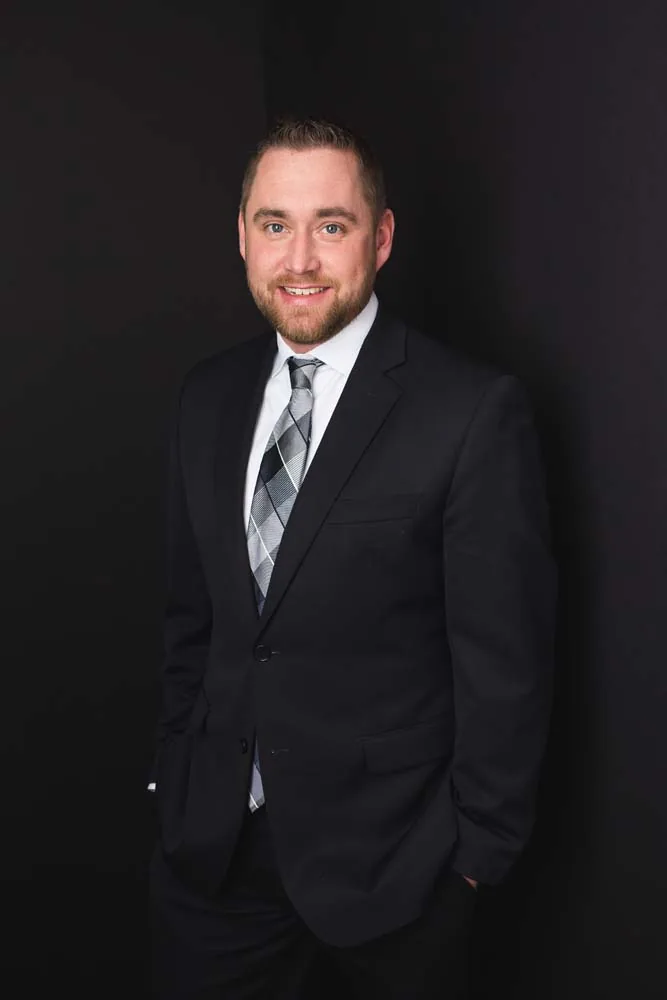
A name these courthouses already know
Scott is a second-generation defense attorney, nine years into his own practice. He clerked for his father, Stephen T. Rabaut, a respected Southeast Michigan criminal defense attorney who has defended the rights of Michigan residents for decades.
He has seen it from every side
Scott worked in loss prevention, at the Michigan Department of Corrections, and as an extern with the prosecutor's office. He knows how the other side builds a case.
Criminal defense is all he does
Scott practices criminal defense only, never a general practice. His full-time focus stays on your charges.
You sit down with Scott
The person who hears your story is the person who handles your case.
Start with a free conversation
Your first consultation costs nothing. A straight answer about where you stand from someone who does this every day, not a guess from Google or advice from a friend.
Flat-fee pricing, no surprises
You know your full fee up front. No surprise invoices later.
24/7 live answer
Day or night, your call reaches a real person, not a recording.
A live person answers 24/7. Your first consultation is free.
A real conversation, and an honest assessment.
Some lawyers will say whatever it takes to get you in the door. Scott will not. When you sit down with him, he tells you the truth about your case: what is possible, what is likely, and what it will take to get there. If he is the right person to defend you, he will say so. If he is not, he will tell you that too.
This is your future. You deserve someone who is honest with you from the very first call.
Call Now — (586) 243-4140Frequently Asked Questions
The Right Move Is the One You Make Right Now.
Every day that passes without the right attorney in your corner is a day the other side uses to build their case.
Free initial consultation
Prefer to Call?
A live person answers every call — 24 hours a day, 7 days a week.
(586) 243-4140Law Offices of Scott E. Rabaut
38600 Van Dyke Ave., Suite 200
Sterling Heights, MI 48312
Callback within 24 hours — sooner when urgency requires it.